Conditional statements in programming are essential for controlling the flow of a program. They allow your code to make decisions and respond differently based on various conditions. If you’re new to coding, learning how to use these statements effectively will open the door to writing interactive and dynamic applications. This guide will walk you through the fundamentals of conditional statements using clear examples from C#.
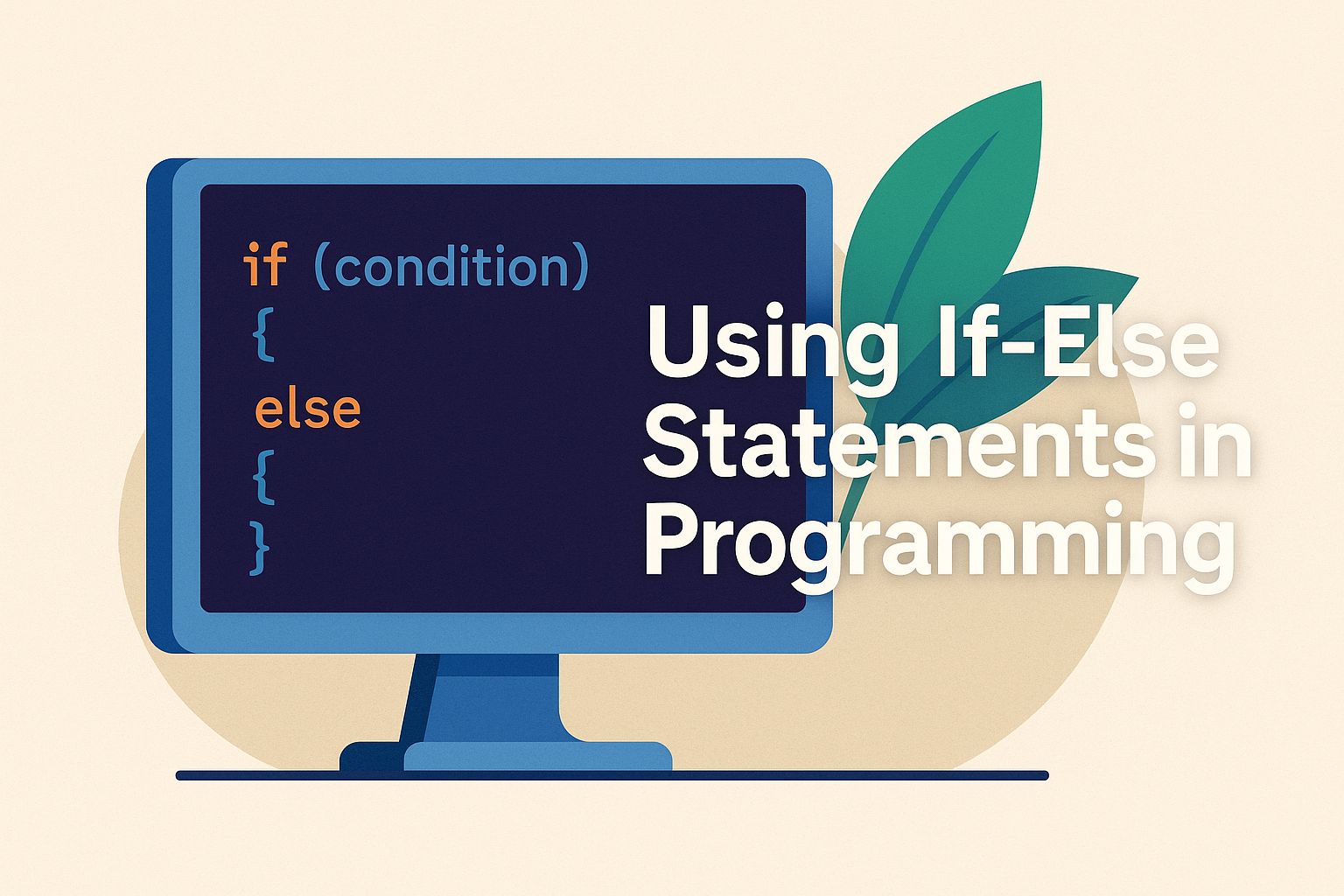
Table of Contents
What Are Conditional Statements in Programming?
In programming, conditional statements are commands that perform different actions depending on whether a specified condition is true or false. They work like decision points within your code, guiding the program’s behavior.
Imagine you want your program to behave differently if a user is logged in or not. Conditional statements allow you to check the user’s status and execute code accordingly.
The Basic If-Else Structure
The most common conditional statement is the if-else statement. Here is its basic form:
if (condition)
{
    // Executes if the condition is true
}
else
{
    // Executes if the condition is false
}
For example:
int temperature = 30;

if (temperature > 25)
{
    Console.WriteLine("It’s a hot day.");
}
else
{
    Console.WriteLine("It’s not too hot today.");
}
This code checks if the temperature is above 25 degrees and prints a message based on the result.
Adding More Choices with Else If
When you have more than two possible outcomes, you can use else if to check multiple conditions sequentially:
int temperature = 15;

if (temperature > 30)
{
    Console.WriteLine("It’s really hot.");
}
else if (temperature > 20)
{
    Console.WriteLine("It’s warm.");
}
else if (temperature > 10)
{
    Console.WriteLine("It’s cool.");
}
else
{
    Console.WriteLine("It’s cold.");
}
This structure allows the program to evaluate several ranges and respond accordingly.
Nested Conditionals for Complex Decisions
You can also nest conditional statements inside one another to build more sophisticated logic:
bool isWeekend = true;
int temperature = 22;

if (isWeekend)
{
    if (temperature > 20)
    {
        Console.WriteLine("Go to the beach!");
    }
    else
    {
        Console.WriteLine("Stay indoors and read a book.");
    }
}
else
{
    Console.WriteLine("Time to work!");
}
Nesting lets you create layered decision-making processes, but keep your code clean to avoid confusion.
Why Are Conditional Statements Important?
Conditional statements in programming are critical because they give your programs flexibility and intelligence. Without them, your applications would perform the same actions regardless of different inputs or environments, making them rigid and less useful. These statements enable your code to adapt dynamically, responding appropriately to user interactions, external data, or system states. For example, in a web application, conditionals determine what content a user sees based on their login status or preferences. In games, they control how characters behave or respond to player actions. Mastering conditional logic not only helps you build functional programs but also paves the way for learning more advanced programming concepts such as loops, functions, and object-oriented design. As you progress, you’ll find conditionals at the heart of real-world systems, powering smart features and user-driven behaviors.
Best Practices for Using Conditional Statements in Programming
- Keep conditions clear and simple: Complex conditions can be broken into smaller parts.
- Use logical operators: Combine multiple conditions with
&&(and) and||(or) to simplify your code. - Avoid excessive nesting: Deeply nested conditions make code hard to read. Consider alternative approaches like early returns or switch statements.
- Comment your code: Explain the purpose of complicated conditions for better maintainability.
Summary
Conditional statements in programming empower your code to make decisions and behave intelligently. Whether you are checking if a number is positive or handling multiple user scenarios, mastering if-else structures is essential.
Start experimenting with these concepts today. The more you practice, the more natural writing conditional logic will become — a fundamental skill for every developer’s toolkit.
Leave a Reply